

Lights, camera, action! When everyone has rehearsed and is ready for the big performance, is your stage floor ready, too?
Stage often takes a beating with the rolling weight of risers, installation of set pieces, and placement of concert band chairs. When the time comes for a stage floor replacement, it’s important to know your options.
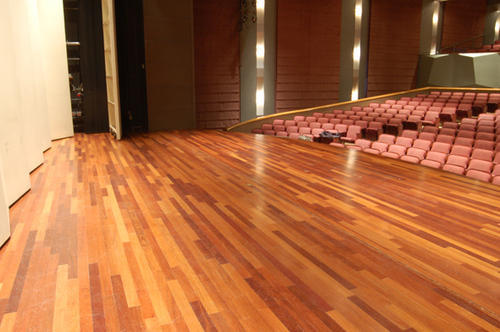
Stage Floors Surfaces
It’s not uncommon for stage floors to be constructed using different types of wood. While using multiple materials may seem odd, this approach allows for a stage floor system that is easier to maintain over time, more cost effective, and beneficial for theatre stage props.
Pine Flooring for Stage Floors
Soft woods such as pine is often used behind the curtain where stage sets are attached to the flooring. Soft woods generally don’t splinter and can be easily patched up after sets are removed.
The flooring behind the curtain is also typically painted black in a matte finish so it doesn’t cause a reflection, and they can hide imperfections from previous performances.
Tempered Hardboard for Stage Floors
Facility owners can also choose hardboard as an alternative to pine for behind the curtain stage floors. This engineered hardboard is composed of pressed wood fibres.
Like pine , tempered hardboard does not splinter when sets are screwed into the surface, and it gets painted black. The sheets are easy and affordable to replace if a piece of the stage flooring does get damaged.
Hardwood Maple for Stage Floors
The most popular place to use hardwood maple is for the apron or the front of the stage. Utilizing maple floors before the curtain allows for an aesthetically-pleasing finish. This is the area many members of the audience will be able to see. Having attractive flooring at the stage apron is also better for special presentations.
However, sometimes schools and facilities that intend to use their stage for a multi-functional space, such as an area for after school activities or gym class, and choose to install maple over the entire surface.

