

Vinyl, laminate, hardwood, rubber or ceramic tiles? We take a look at the ideal commercial flooring option for your office space. This means considering, service life, traffic levels and maintenance when making your choices.
When deciding on the best type of flooring for a modern office space, there are a number of popular commercial flooring options to consider and factors that could make one option better than another. This article may help you when discussing options with clients.
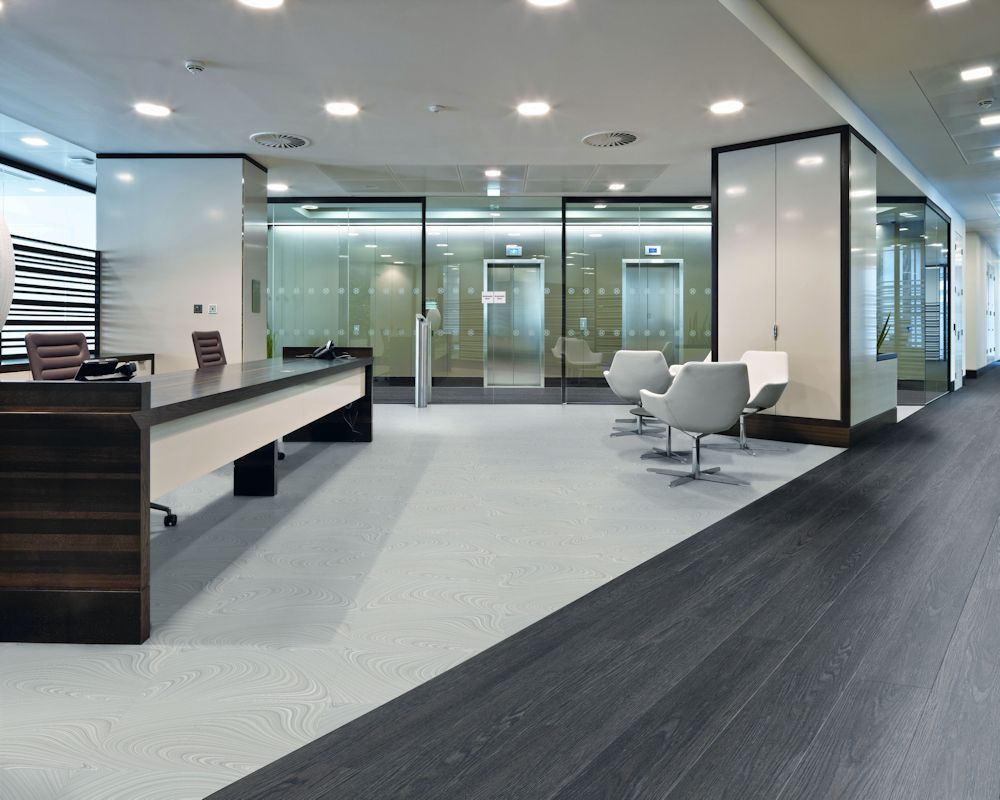
Key considerations when choosing office flooring
Not all floor finishes will suit every location. Factors to take into account include:
Traffic levels and service life
Consider the life expectancy of your chosen flooring type, taking into account the traffic it will have to withstand. High footfall through the office will need flooring that is robust enough to withstand the wear and tear.This classification system, which is used for flooring made of carpet, vinyl, laminate, parquet, ceramic tiles, etc. roughly defines what type of room each floor can be used in. Ir means that the floors can be used for moderate commercial use.
The standard requires that the flooring product will last at least 10 years without presenting problems, if used in a designated room type. However, the floor must have been installed according to the instructions and used and maintained as prescribed for this to apply.
Repair flexibility
Be sure to choose flooring that is easy to access should it require repair, with minimal inconvenience to staff and clients.
Maintenance
Consider the cost of labour required to maintain the flooring over time versus the installation cost.
Installation
Some forms of flooring are much cheaper and quicker to have installed than others, so remember to take this into account when looking at your available budget and practical downtime.
Cost
The cost of your choice of flooring material should be weighed up against ease of maintenance and life expectancy; cheapest is not necessarily the most cost-effective in the long run.
Types of flooring
Hardwood flooring
Hardwood flooring is stylish and gives an office a classic, executive feel. It’s very durable although it can be damaged by water. The main drawback of hardwood flooring is that it is usually the most expensive flooring option. Hardwood can also be slippery if it is over-polished.
Laminate flooring
Laminate offers a cheaper alternative to hardwood, ceramic tiles or stone. It is simple and cheap to install and very resistant to scratches, also being resistant to water damage. It is available in many varieties of hardwood and can give an office a very natural looking appearance.
Vinyl flooring
Vinyl flooring is a popular form of commercial flooring due to its longevity and hard-wearing performance qualities. It is perfect for office premises with high foot traffic levels as it is resistant to damage, such as dents from heels or scratches from dragged furniture. It’s also easy to clean and requires minimal maintenance.

