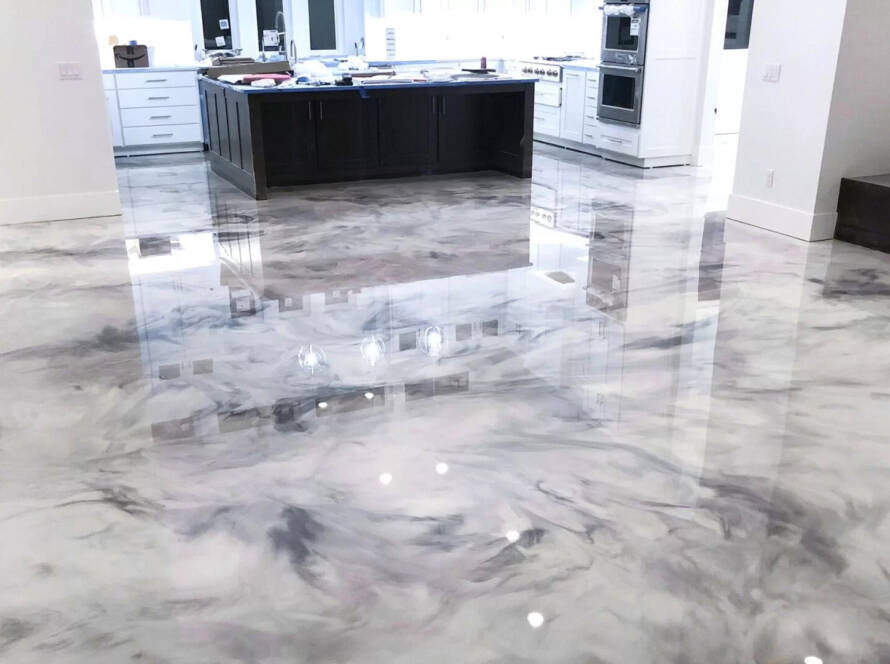
Epoxy is becoming more and more popular as a flooring option in residential, commercial, and industrial applications. Epoxy floor coatings are typically two-part systems consisting of a Part A resin and Part B hardener. Specialty additives like flow control, UV inhibitors, adhesion promoters, accelerators, etc, are added to create coatings that perform well in a wide variety of flooring applications. Using these specialty additives, epoxy floor coatings are formulated to achieve different desired performance characteristics like a more rapid cure, increased abrasion resistance, higher chemical resistance, higher or lower viscosity, and many others.
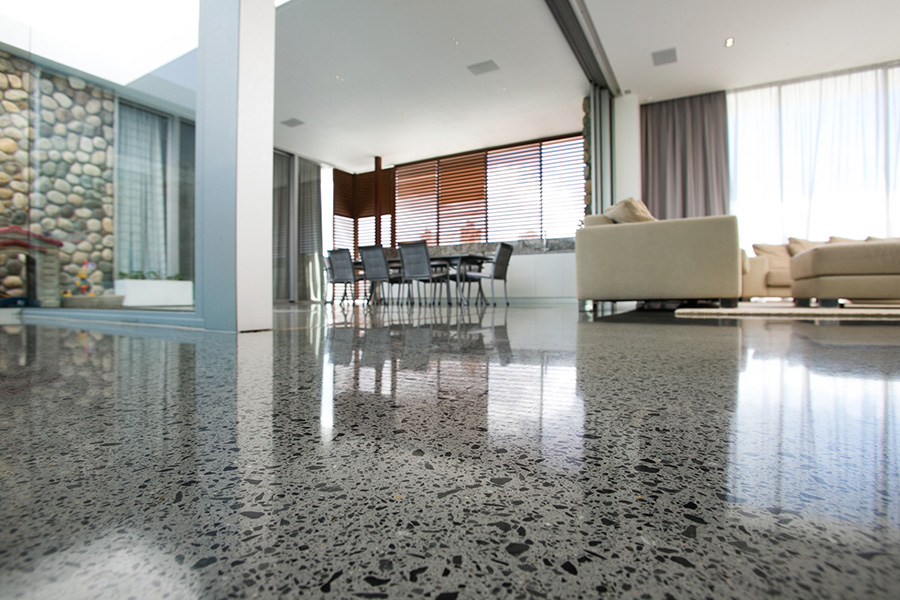
Benefits of Epoxy Flooring
There are plenty of benefits of epoxy flooring, for which it is popular and used for a variety of commercial applications.
Waterproof
Epoxy flooring is waterproof and resists mold, mildew, and bacteria growth. Its waterproofing property makes it ideal for use in hospitals and commercial kitchens susceptible to dampness due to repetitive cleaning. In addition, floor epoxy covering creates a watertight bond and seals the concrete surface below the flooring, preventing moisture penetration.
Spill-Resistant
The waterproof seal and bond make any concrete floor, spill, and chemical resistant. In addition, the epoxy coating seals the pores of the concrete floor and prevents the seepage of water and other liquids. This makes epoxy an ideal flooring solution for applications like commercial kitchens, hospitals, laboratories, and chemical factories.
Easy to Install
Epoxy flooring is fast and easy to install as compared to other floorings. It means any organization planning to install epoxy flooring won’t need to pause its operations for long. Moreover, due to easy and convenient installation, installation costs are also less than other floorings like hardwood or timber.
Slip Resistant
Commercial epoxy floor coatings do not allow water to penetrate, which reduces the risk of slips and falls. Instead, epoxy manufacturers add a slip-resistant coating to make it safe for people to walk and move.
Easy to Maintain
Another advantage of epoxy flooring is that it’s very simple to maintain. Unlike concrete flooring that is brittle and coarse, you can easily sweep, mop, or vacuum clean floor and maintain its shine. Even grime, germs, bacteria, and other contaminants don’t adhere well to epoxy, making it an effective sanitary coating.
What are the disadvantages of epoxy flooring?
Here are some of the cons of epoxy floors:
- Although not true of all epoxy floors, some floor covering types can get very slippery when wet.
- It resin floors contain hardeners that release nasty fumes after laying, and this might be off-putting in commercial flooring — mainly if you apply it in a commercial kitchen.
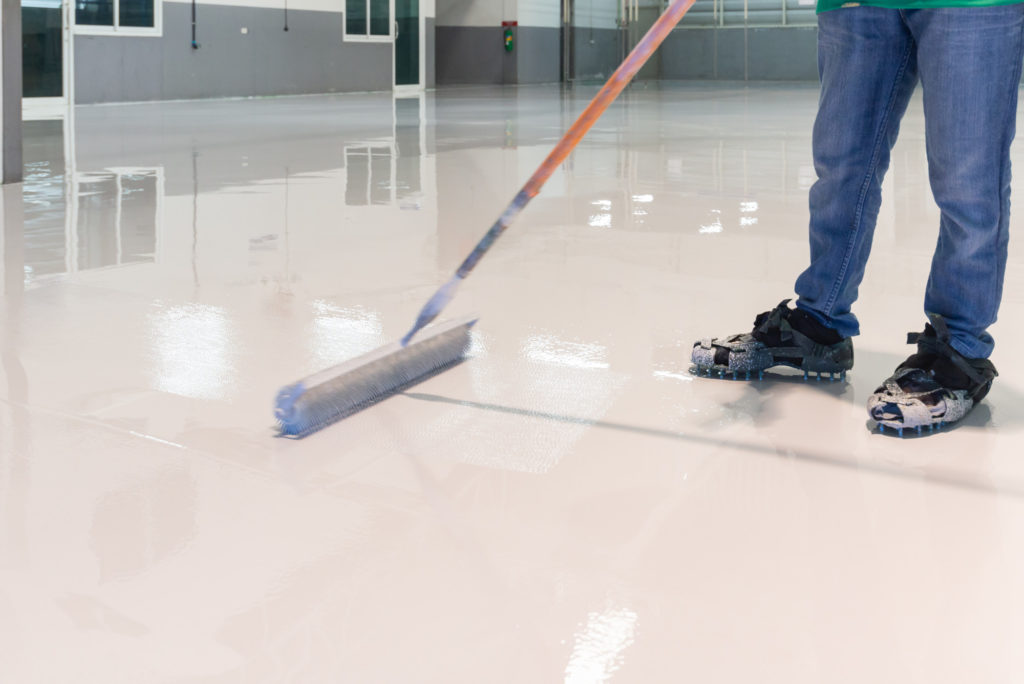
How long do epoxy floors last?
If you’re looking for robust and resistant floors, epoxy floors are durable and easy to maintain. When installed properly, it’s highly resistant to general wear and tear. A typical residential epoxy floor could last for up to 30 years or more.
Although, an industrial epoxy floor is unlikely to last as long. Commercial epoxy floor coating might need replacing or renovating sooner with more heavy-duty use