

Vinyl Tiles vs. Laminate flooring, each one offer many of the same advantages: durability, good looks, economy and easy do-it-yourself installation. From a distance, both types of flooring even look similar.
Neither type of flooring is better than the other across all categories. Vinyl flooring is best in high-moisture areas and it’s easy to keep clean. Yet laminate flooring offers a wider variety of style choices and has a higher resale value.
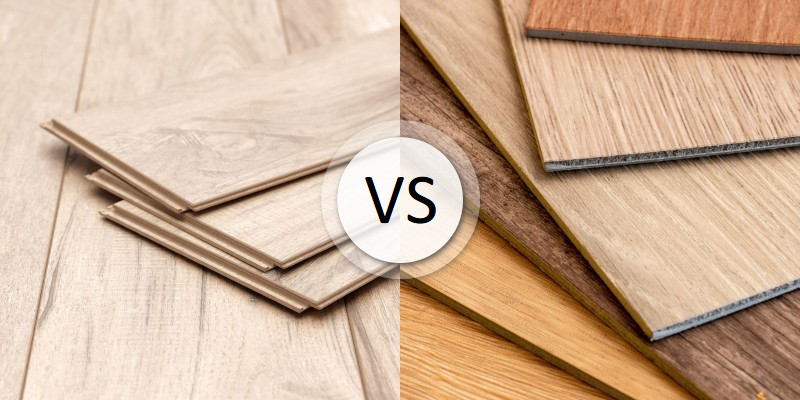
What Is Vinyl Flooring?
Standard vinyl flooring usually consists of four layers of materials. The first, or bottom, layer of these is the backing layer, generally made of cork or foam. It is designed to serve as the underlayment for the vinyl flooring so that you do not have to install another material prior to laying down the vinyl flooring. Additionally, it functions as a cushion to make walking on the floor more comfortable and a sound barrier to keep noise at bay.
What Is Laminate Flooring?
Unlike natural flooring options like wood, stone or cork, laminate flooring is a synthetic material. It’s made up of four different layers—wear, décor, core and backer—that are sealed together in the lamination process. It is intentionally designed to be durable as well as affordable. Because of the décor layer (a printed image), it can recreate the look of more expensive flooring types like wood, tile or stone.
Vinyl vs. Laminate Flooring
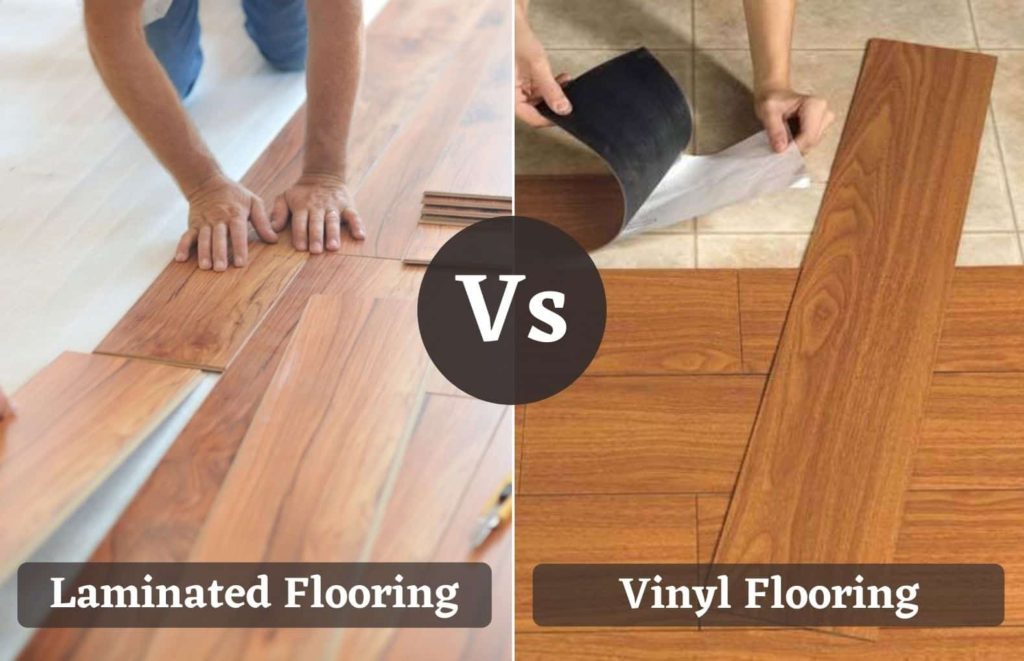
Comfort
One of the major benefits of choosing laminate flooring is its comfortable feel underfoot. You may not think of this feature as a significant factor in your decision about which flooring type you choose, but the underfoot feel can have a big impact on whether you enjoy walking on your floors day in and day out. Laminate has a thicker composition that includes wood content, which helps it to feel warmer and slightly soft. Vinyl, however, tends to be quite hard and cold to the touch, because there’s no insulation between it and the subfloor. So, it’s generally not the best choice for main living areas and bedrooms.
Durability
People often turn to vinyl plank or laminate flooring to get the look of hardwoods without the risk of scratches, dings and other flaws that can be time-consuming (and expensive) to repair.
Vinyl flooring does hold up well in high-traffic areas, unlike real hardwood. However, it is prone to damage that hardwood can withstand. It can dent over time, particularly in areas under heavy furniture. There’s also a risk of it ripping, like when furniture is being dragged across the floor.
Laminate flooring, like vinyl flooring, is also extremely durable and is a good choice for homes with children and pets. It’s extremely resistant to damage and will not have to be refinished over time like traditional hardwoods. However, it’s possible to scratch or chip laminate flooring. Very heavy wear over the years can result in minor scratches on the flooring.
Which is Better, Laminate or Vinyl Flooring?
So, who’s the winner in the vinyl tiles vs. laminate match? The real deal is this: There is no one-size fits all answer. Both are strong, beautiful floors that are less expensive than natural wood. The “better” option is mostly a matter of your opinion. Give each of these pros and cons some thought.

