

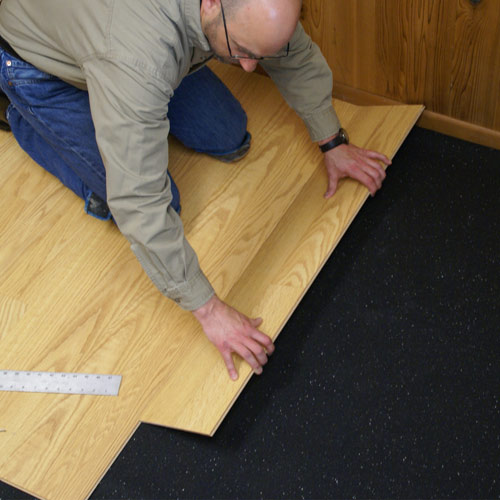
Installing underlayment over an existing floor can sometimes be possible, but it depends on several factors:
• Condition of the existing floor.
The existing floor should be in generally good condition, with no major water damage, rot, buckling or other serious problems. Minor imperfections can often be covered by underlayment, but extreme floor issues typically require repair or replacement.
• Seam gaps on existing floors.
Wide gaps or unstable seams between existing floor panels may not be covered properly by underlayment and could still telegraph through. Minor gaps are often fine, but larger issues usually need to be addressed first.
• Thickness of new underlayment.
The thickness of the underlayment you want to install needs to be compatible with the existing floor height. Installing something too thick could cause the floor to become uneven or make transitions difficult. Thin underlayment (1/4 inch or less) typically work best for covering existing floors.
• Tape or glue the seams.
For best results, apply waterproof tape, glue or sealant to the seams and joints of the existing floor before installing underlayment. This helps prevent the underlayment seams from coming loose or separating over time.
• Secure the underlayment.
Proper adhesion and/or mechanical fastening are important to keep the underlayment in place. Glue, double-sided tape, staples, nails or seam tape can help secure the underlayment to the existing floor, especially around the edges and seams.
• Limit foot traffic.
Apply underlayment and sealants to existing floors that see limited foot traffic whenever possible. High-traffic floors can lead to more seam separation over time. Apply seam reinforcement especially to high-traffic areas.
• Test in an inconspicuous area first.
If possible, apply a small section of underlayment to an inconspicuous area of the existing floor to ensure proper adhesion before installing in high-visibility areas. This allows you to address any installation issues before committing to a large area.
With good preparation and the proper methods, installing underlayment over an existing floor can provide coverage, cushioning, soundproofing or moisture benefits. However, the condition and configuration of your existing floor will ultimately determine if this approach is feasible and effective in your specific situation.
