

First, you need to know what waterproof vs water resistant means. Both terms refer to a material that can prevent or repel water, which is great for bathrooms or kitchens. However, they’re not interchangeable terms.
Waterproof refers to a permanent material, which means water won’t penetrate the flooring, no matter how much time goes by. For example, waterproof flooring can be installed in any room, but it’s more expensive than water-resistant flooring. A water resistant floor refers to how flooring material protects flooring substrate from water infiltration.
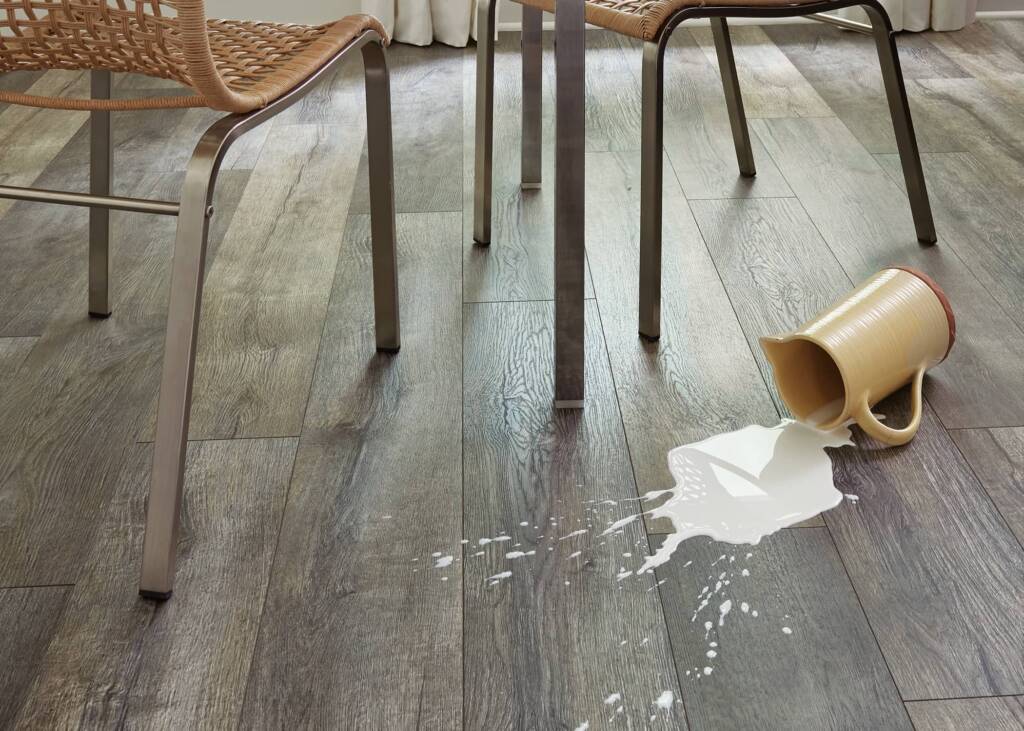
Waterproof Flooring
Durability
Vinyl flooring is a durable waterproof option, as it won’t deteriorate if it’s exposed to water for an extended period. Additionally, the colour of the floor will remain and won’t fade. You won’t need to worry about vinyl flooring curling up at the edges or the composition of the flooring breaking down to the waterproof properties of the flooring material.
A waterproof floor can prevent moisture in the air due to climate or flooding from infiltrating the flooring material. None of these events will damage the floor, which is important to consider if you live in an area prone to humidity or flooding.
Versatility
Waterproof flooring can be installed in any room of your home. It’s great in the kitchen, bedroom, bathroom, and basement. However, it is not recommended for any outdoor installation. Waterproof indoor floorings are not typically resistant against sun damage or any other weather elements.
While many luxury vinyl or engineered hardwood floors are waterproof, you shouldn’t assume they all are. The ones labeled as 100 percent waterproof are what you want to look for. You should also keep in mind that while your flooring can be waterproof, the subfloor underneath may not be. As a result, you’ll need to keep water from getting under the flooring to prevent flooring damage.
Water-Resistant Flooring
Absorption Rate
One point to keep in mind about water resistant flooring is the time you can allow water to sit on top of the floor. As long as you mop up water on the floor somewhat quickly, it won’t have time to absorb into the floor and impact the material underneath. Water doesn’t go through water resistant flooring as quickly as it does with something like wood flooring. Since water resistant flooring can handle small spills on occasion, this flooring option will last longer.
While you can install water resistant flooring in a kitchen, you want to be attentive to water collecting on the flooring itself. If you are considering laminate, make sure it has a water resistant core in addition to a protected top layer.
Appearance
While hardwood floors is more natural than water-resistant floors,hardwood will absorb water that sits on it. Hardwood isn’t a good option for many parts of a house, as only the top finish will resist water. You might actually be surprised at the beauty of modern water resistant flooring. It closely as real hardwood, and is available in many shades and even textures.

