

When purchasing new flooring, it’s important to consider not only the material and style but also how it will be installed. Different floors require different flooring installation techniques to achieve a safe, durable and attractive result. Several common installation methods are used for various flooring types.
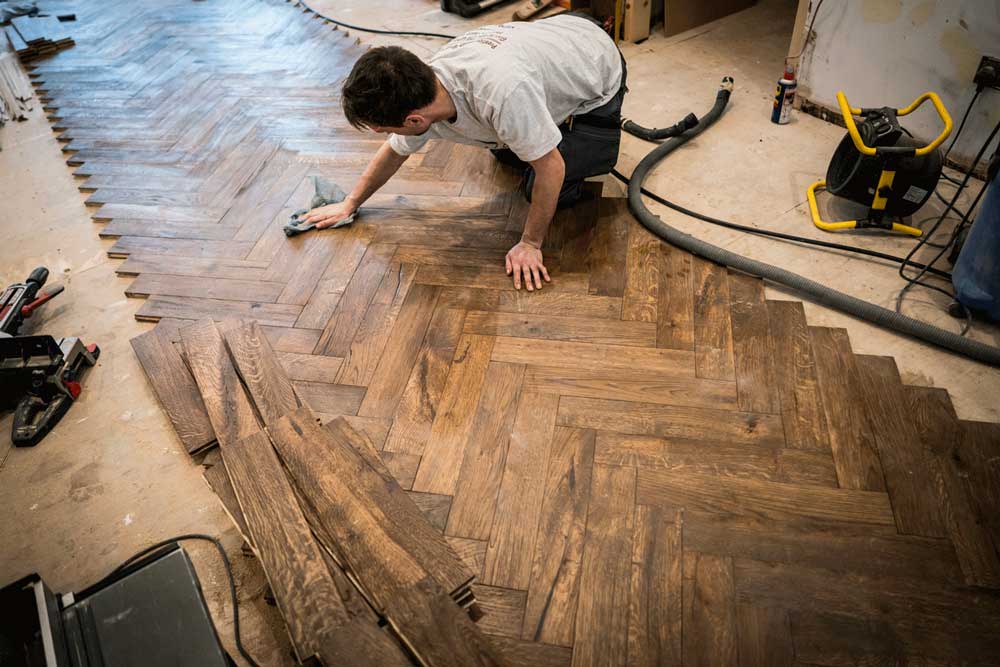
Floating installations
First,they use a wood, laminate or luxury vinyl floor that locks or clicks together along the edges and sides without being glued down. These floors can be installed directly over existing wood, tile or laminate floors. They allow for expansion and contraction and easy removal. However, they may not be stable enough for high-moisture areas like bathrooms.
Glue-down installations
Then,they adhere the flooring permanently to the subfloor using an adhesive. This creates a very strong, stable bond. Wood, stone, tile and luxury vinyl floors are often glued down. Glue is applied to the subfloor and back of the flooring planks/tiles which are then pressed into place as the adhesive dries.
Peel-and-stick
Also,it has releasable adhesive backing so planks can be removed and repositioned before final adhesion. It’s easy to install but may not provide as strong a bond as traditional gluing. Laminate, vinyl and wood planks can be peel-and-stick.
Click-lock or interlocking floors lock or snap together along the sides and edges for installation without adhesives. They provide stability for floating floors in higher-moisture areas. Vinyl, wood, stone and laminate planks can come in click-lock styles.
Stair treads simply adhere or screw down to staircases. They require adhesive, the use of construction adhesive and screws through the underside for stability. Wood, stone, laminate and vinyl can be used for treads.
Professional installation provides the strongest, most durable result but can be expensive. DIY installation saves money but may not achieve professional quality, especially for complex layouts or high-moisture floors like showers. DIYers can use tools like spacers, tapping blocks, pull bars, and rented equipment to get close to pros.
Finally,proper installation leads to a floor that lasts longer, prevents damage and causes fewer problems down the road. Understanding your options and following recommended techniques for each flooring type will ensure end results meet all requirements for every space in your home. From floating to glue-down, click-lock to stair treads, choosing the right method leads to beauty and stability that stand the test of time.

