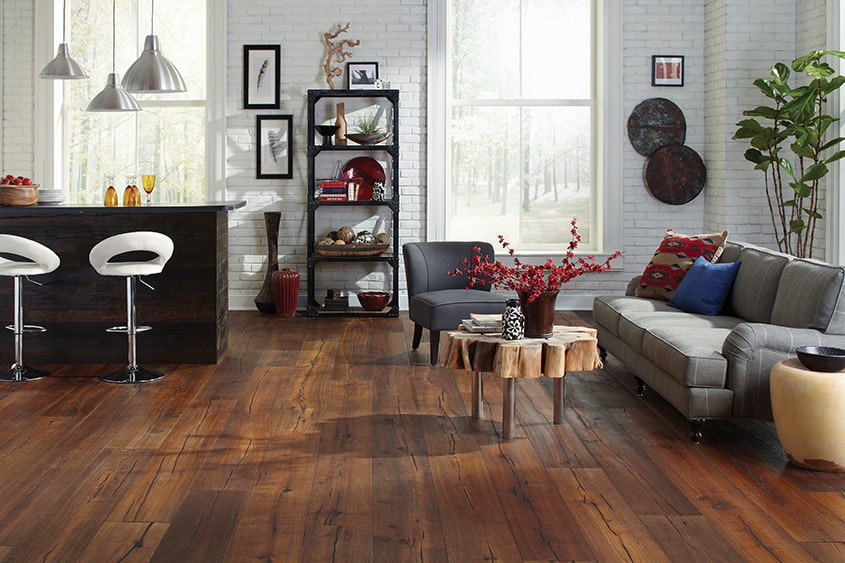
The flooring used in homes can have a significant environmental impact, from the resources and materials required to manufacture the floors to how efficiently and easily they can be recycled or repurposed in the future. Some flooring options are more sustainable and eco-friendly than others.
When choosing flooring, factors to consider environmental impact include:

Renewability.
Floors made from renewable impact of flooring materials like bamboo have a smaller environmental footprint than those from non-renewable sources. They reduce long-term strain on resources.
Recyclability.
Certain recyclable floors like bamboo, cork, linoleum and vinyl can be recycled back into new flooring product at the end of their useful life. This keeps materials out of landfills and reduces waste. Other floors cannot be effectively recycled and end up in landfills or are incinerated.
Low or no VOC emissions.
Volatile organic compounds (VOCs) emitted from some flooring materials, adhesives and grout can pollute the air and cause health issues. Look for floors with no or low VOC emissions for the greenest options, especially if installing new flooring in a well-spaced home.
Durability.
Durable, longer-lasting flooring requires fewer replacements, thus reducing the environmental impact of manufacturing new floors, adhesives and installation over time. High-quality, high-durability floors have the lowest environmental cost, despite higher upfront costs.
Reusability.
Some floors can be repaired, refinished or refurbished and reused rather than fully replaced. Sanding, staining and re-sealing wood floors for example has a much smaller footprint than wood replacement. Reusability should be a priority for greener redesigns or renovations.
measures. Certified floors meet strict standards that aim to minimize environmental impact through renewable, low-VOC and durable materials.
Although upfront costs of eco-friendly flooring tend to be higher, you save money in the long run by reducing replacement needs and health/environmental costs that can far outweigh initial investment. Going green provides benefits that last beyond specific flooring installations. With knowledge of these factors, you can make the choice that affects the environment as little as possible while enhancing your space for years to come. Sustainable flooring is the way of the future, so choose options you can feel good about and be proud to stand on for a lifetime.