

There’s a high chance that you’re struggling to choose between the two remaining better options – engineered hardwood and vinyl plank flooring, if you’ve completely ruled out solid hardwoods from your flooring options. Compared to solid hardwood flooring, these two options are better in terms of moisture resistance, ease of installation, pet-friendliness, and obviously, in terms of cost
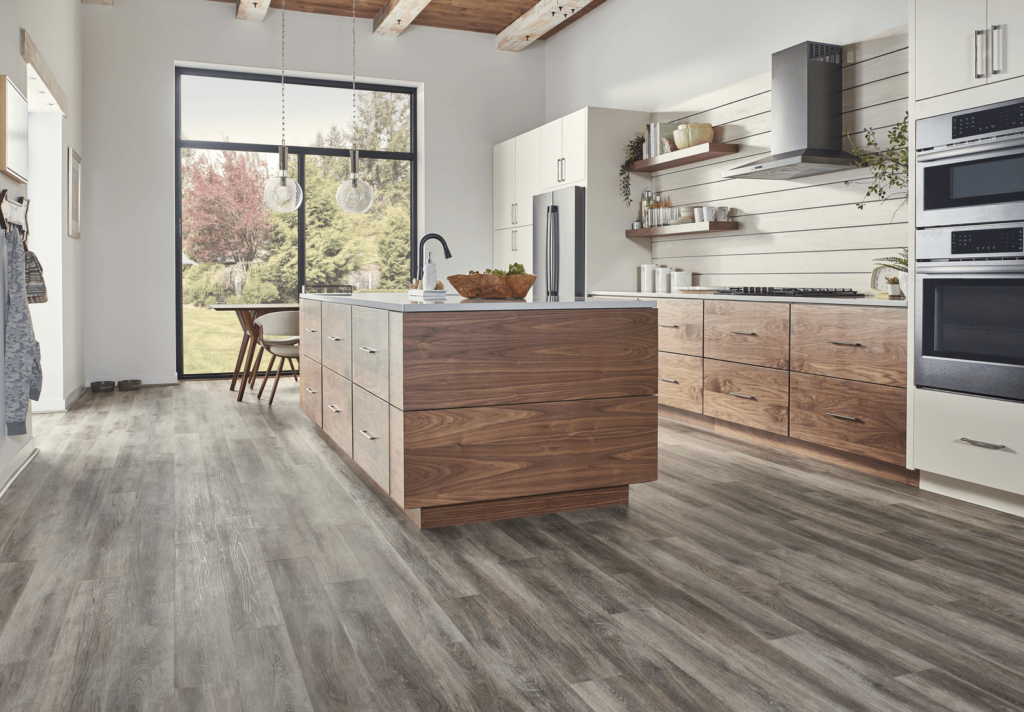
Vinyl Planks
Vinyl flooring planks are simply synthetic wood-like planks created by printing the wood-like patterns on top of vinyl planks. These planks are made up of melted polyvinyl chloride (PVC) resins combined with fungicides and stabilizers.
You might already know how vinyl planks are a great alternative to hardwoods. However, even if you’re not trying to achieve the typical ‘wooden’ vibe for your flooring, you can choose from a variety of other designs that vinyl flooring comes with, including cement or stone printed flooring planks.
Engineered Hardwoods
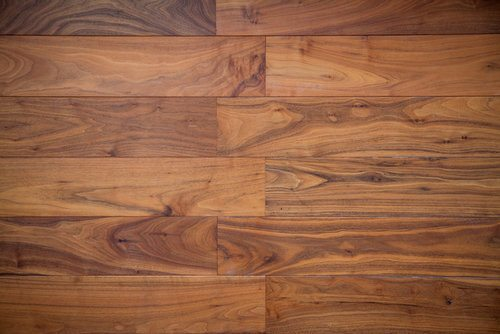
If you didn’t know, not all hardwoods are solid hardwoods. Engineered hardwoods are made up of multiple ply layers and have a hardwood top layer called a wear layer.
High-quality engineered hardwoods often have a 2mm wear layer and a 3mm overall thickness. When you install engineered hardwood flooring, your floor will not only look like it imitates hardwood flooring, but it actually flaunts real wood.
Engineered Hardwood Vs. Vinyl Plank Flooring
Look And Feel
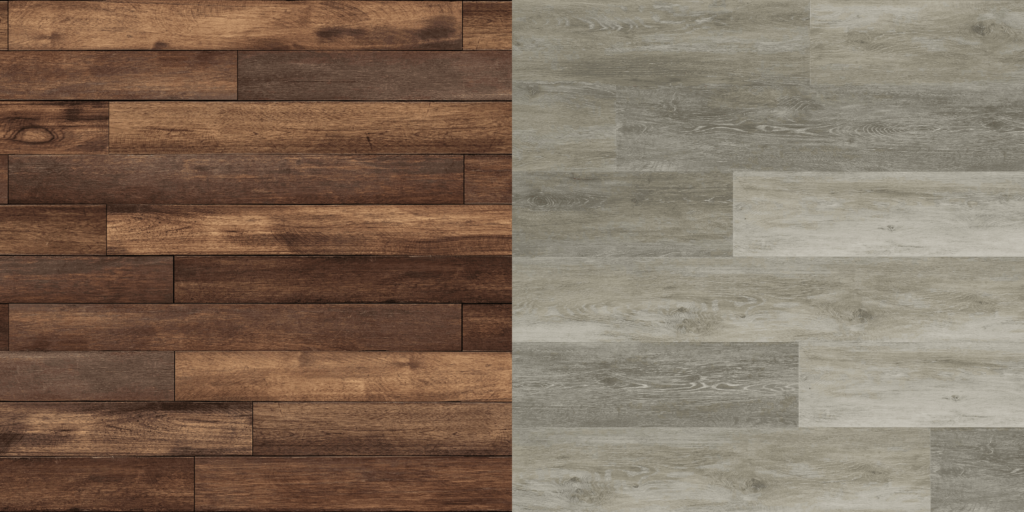
With the high-end technologies that we have today, vinyl planks almost look and feel like the real deal. The colors, markings, patterns, and overall finishing of vinyl planks are unbelievably impressive.
Engineered hardwoods, on the other hand, are real wood, not just a high-end imitation of it. So, it is needless to say that they impart the warmth and antique ambiance of genuine solid hardwood flooring.
Durability
Both engineered hardwood and vinyl plank flooring are extremely durable. However, these both come with their own list of pros and cons.
Vinyl planks are more resistant to scratches, chipping, and other surface damages. This makes vinyl planks an ideal choice for pet parents. However, if you’re not careful while moving your furniture around, the vinyl plank flooring might end up tearing at the edges. Also, vinyl flooring underneath heavy furniture will probably dent.
Engineered hardwoods resist dings quite well but are prone to scratches and chippings. The hardwood on the top layer makes the imperfections conspicuous.
Nevertheless, since some brands use a protective finish on engineered hardwoods, they are relatively tolerant to such surface damages in comparison to solid hardwoods.
Engineered hardwood flooring and vinyl plank flooring both are susceptible to fading under extreme heat and sunlight. So, many experts often suggest their clients cover the exposed flooring with a rug or shade.
Cost
The best aspect of engineered hardwoods and vinyl planks is that they are much cheaper than solid hardwoods.
The general cost range of vinyl planks is $2 – $7 per square foot. While way cheaper than solid wood, engineered wood can cost you around $4 – $10 per square foot or even higher. The price range for both flooring options depends upon the quality, type, and many other factors.
Moreover, you must take into account the installation costs for these floorings before deciding on one. The installation costs are almost equal, if not more than you pay for your flooring planks. The installation cost for engineered hardwood can be slightly more than for vinyl planks.

