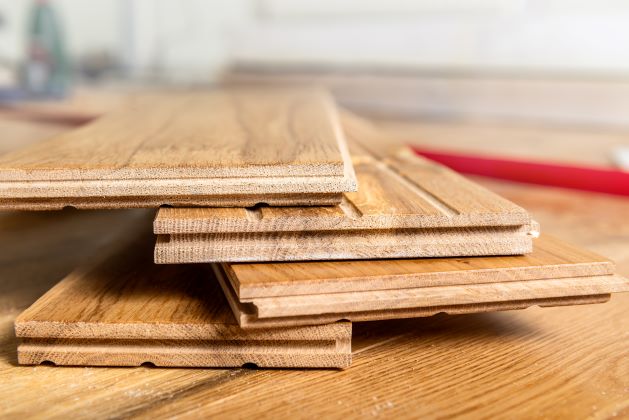
Some common causes of parquet floor warping include:

• Excessive moisture exposure –
First,water damage can cause parquet floor warping, buckle and cup as the wood swells. Warping from moisture is often the worst type of damage. Installing a vapor barrier under the floor and controlling humidity levels can help prevent this issue.
• Subfloor movement –
Next,if the subfloor underneath the parquet flooring is unstable or insecure, it can develop sagging, sloping or bounce which forces the parquet pieces out of proper alignment and causes them to warp. Securing the subfloor and any floor framing will minimize movement that leads to warping.
• Improper acclimation –
Next,exposing new parquet floors to the conditions of the space too quickly can cause the wood to warp as it adjusts to the environment. Also,allowing the flooring adequate time to acclimate to the temperature and humidity of the room before installation prevents drastic changes after the fact.
• Temperature extremes –
In addition,exposure to very hot or cold temperatures over a period of time can cause parquet wood to expand and contract at different rates, resulting in warping. Also,using wood filler or spacers in expansion joints helps the floor expand and contract evenly with temperature changes.
• Lack of expansion room –
Moreover,when expansion joints are not properly installed or sufficient space is not left for the wood to expand, the edges of the floor can bend up causing boards to warp up at the edges. Expansion joints should be included at the edges of rooms and where the floor meets other materials.
• Undersized wood –
Furthermore,using wood that is undersized for the amount of expansion and contraction it will experience leads to warping as the wood is not able to flex properly within the floor without movement issues developing. Wood selection should consider the environmental conditions of the space.
• Subfloor instability –
Also,an unstable, unsecured or damaged subfloor allows excessive movement which forces the parquet flooring out of alignment, creating waves, bows or humps in the surface. Repairing or replacing any damaged sections of subfloor and securing it properly will help stabilize the parquet floor.
• Excessive weight –
Finally,placing very heavy furniture or equipment directly on top of parquet flooring can cause point loading, forcing the wood down and eventually resulting in warping as the wood flexes under the weight over time. Using pads/coasters under heavy items helps distribute weight more evenly.
In summary, controlling environmental conditions, allowing proper expansion, using suitable wood types, installing expansion joints and maintaining a stable subfloor are key to preventing warping damage in parquet floors. Any existing warping issues should be addressed by correcting the underlying causes, then securing/flattening the warped wood using wood filler, wood glue, dowels or spot replacing damaged pieces.