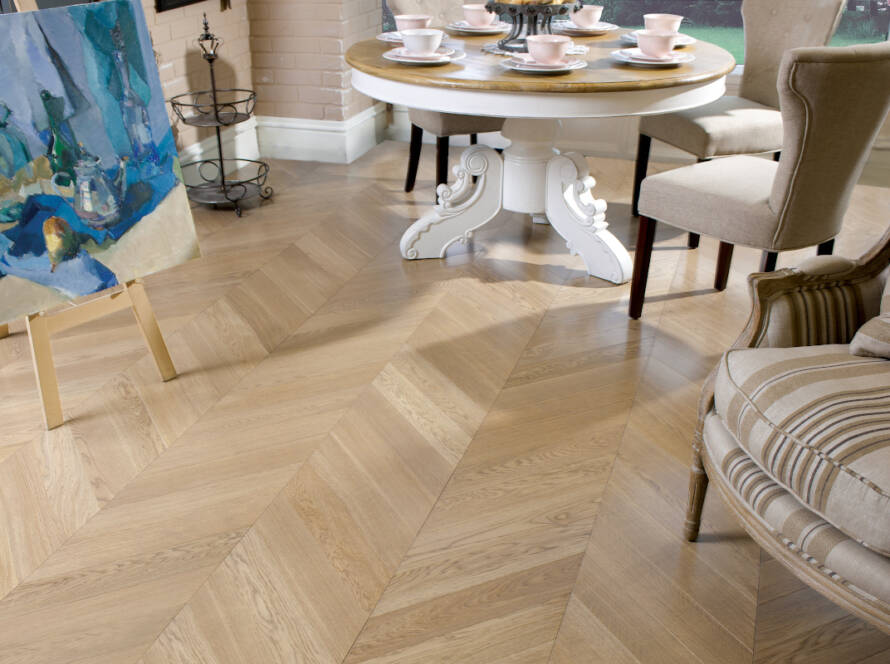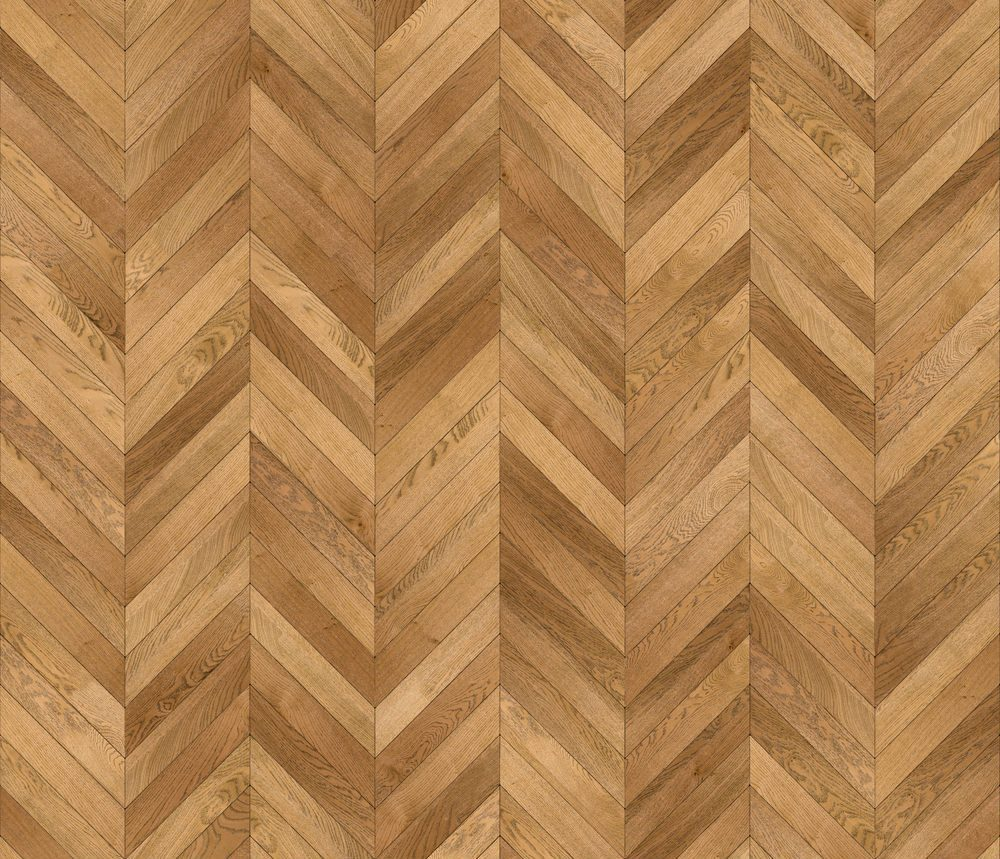
Chevron Parquet: Definition and Design
A chevron parquet, according to textile historian Susan Miller, “are offspring of the herringbone weave, in which columns of short diagonal stripes meeting in a line of Vs not unlike the skeletons of a fish. Some herringbone prints imitate a woven herringbone, complete with uneven lines that imply the roughness of woolly threads; others loudly declare their independence of their ancestor – for example, by setting the diagonals out of kilter, breaking up the V.” These variations create something new and unique and allow for endless design possibilities.
History Of Chevron Parquet Flooring
A deep dive into the Chevron pattern’s history shows it has an alternative name. Some experts also refer to Chevron flooring as Point De Hongrie. This name is from an embroidery pattern — the Flame stitch — popular in the 16th Century.
Fashion is forever transient. The flame stitch itself combines the Hungarian and Gobelin stitch, designs popular in the 13th and 14th centuries. This unique stitch inspired a parquet flooring design in the Queen’s Room at Versailles, France.
There are early references of Chevron Parquet Flooring in notes by Swedish architect Nicodermus Tessin. These notes describe the architectural highlights of the Versailles palace during the 1690s.
Chevron parquet floors crossed from France to England during the 17th century, thanks to her regal highness, Queen Henrietta Marie. She married Charles I. during this timeframe and renovated her official residence, Somerset House. Her renovation included the installation of Chevron floors, introducing a touch of French interior elements to the English.
Which rooms look best with chevron parquet?
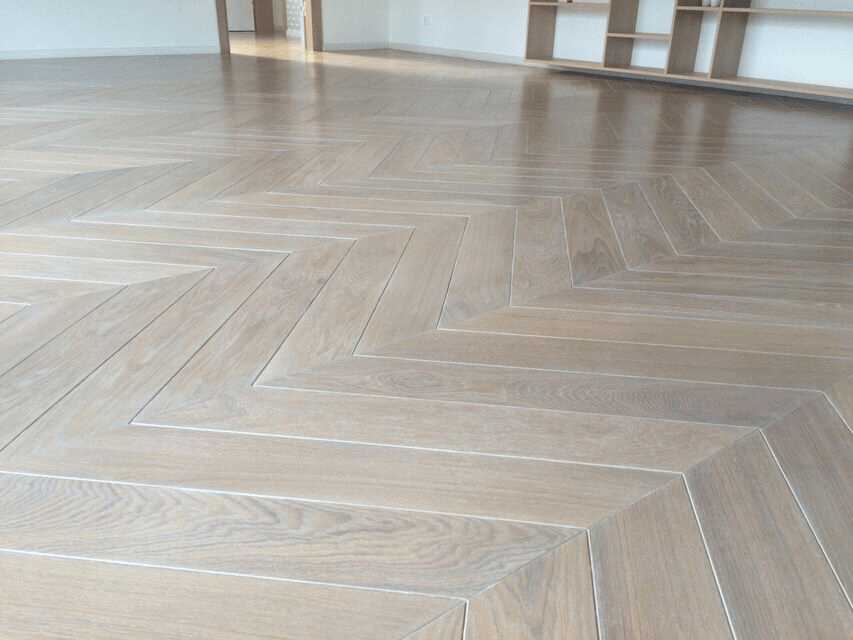
The quick answer to that questions is, that’s all a matter of taste!
However, there are some generally held views on the topic, that could influence which flooring material you use to create your chevron effect floor.
For example, if you select hardwood flooring, the parquet design will be particularly brilliant at standing the test of time in hallways, or any other rooms with high footfall.
You may prefer to save money, and buy engineered wood chevron parquet. Engineered wood is a composite of natural wood fibres and manufactured substrates. The cost is lower than solid wood. However, it is still a strong and beautiful solution for home flooring.
Design features and tips for chevron parquet flooring
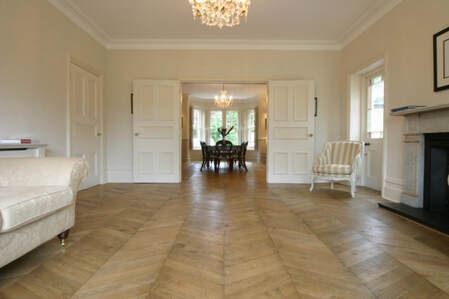
One of the advantages of a chevron design in your floor, is that it can play tricks on the eye. It creates an optical illusion that can make smaller rooms look larger and more spacious!
The strange thing is, that herringbone floor designs can have the opposite effect, fooling the eye to see rooms as smaller. (Which is handy in large, cavernous spaces.)
Whichever type of parquet wood tile you choose, the overall effect suggests luxury and sophistication.
The choices of shades and finishes of this type of wood flooring are extensive. The range includes everything from dark French Oak chevron which creates superior elegance, to much lighter colours that look pretty and soothing.
It is possible to get creative with this style of flooring too, installing the tiles in patterns to suit your own preferences. You can even vary with layout to match each room, and to zone certain areas. So for example, the chevrons could be laid in a way that draws attention to your fireplace, or a feature window.