

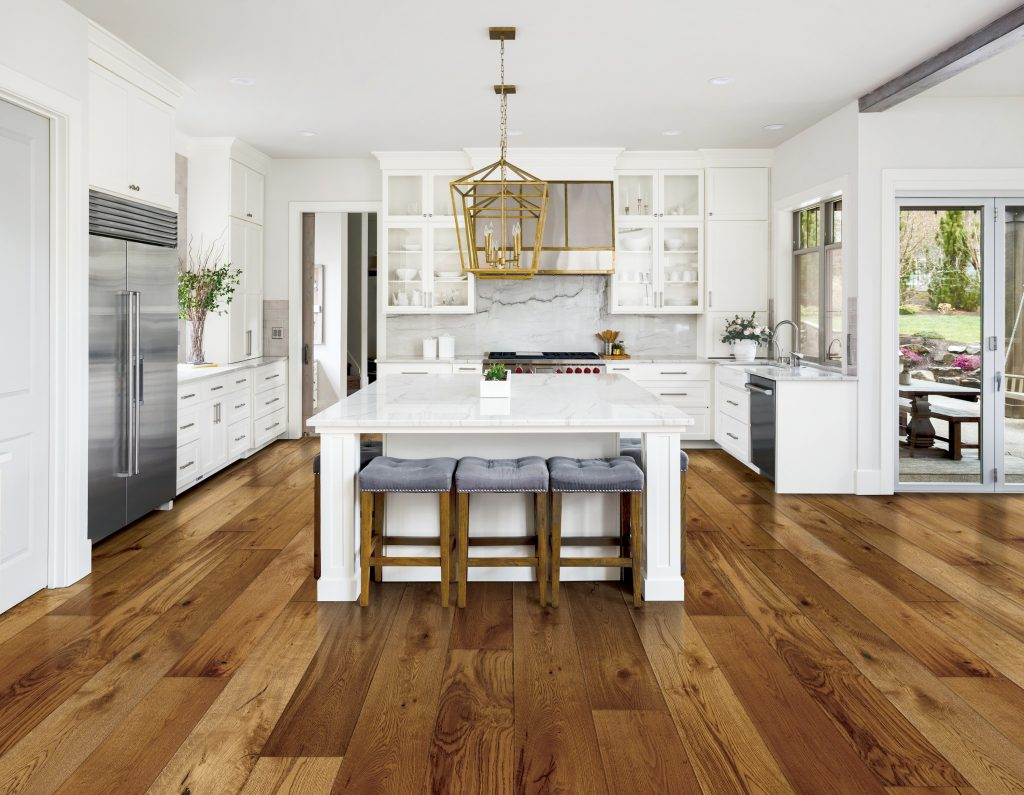
Perhaps one of the best things about engineered wood floors is that it takes the best of solid hardwood and the best of laminate wood floor and combines it into this durable, robust product. Engineered flooring looks exactly like solid hardwood, but it can be installed in basements or other areas prone to moisture. Provided a proper subfloor with a moisture barrier installed under the floor it is an incredibly durable flooring product. By ensuring these are installed under the floor, the floor itself can actually take a lot of moisture. This does not mean spill something on it and leave it indefinitely, but if you home tends to be humid the floor is probably not going to warp or bubble.
How to Clean Your Engineered Floors
Every floor collects messes—it’s just a part of a lived-in home. Unfortunately, engineered hardwood floors tend to show off dust and dirt more than others. With no grooves or fibers for the debris to hide in, it becomes obvious when your pet sheds or your kids track in dirt from playing outside. While this can certainly get obnoxious, it also makes it easy to know when it’s time to clean the floors. Instead of letting dust, hair, and dirt remain in your carpet or tile for weeks, you can quickly take care of any messes. Not only will your home look cleaner, but it will also contain fewer allergens and other irritants that can cause health issues. Your cleaning routine doesn’t have to be a hassle, either. Once you know the steps and build a habit, it’s easy to deal with the messes and keep your floors gleaming like the day you installed them.
Sweep or vacuum daily Your Engineered Wood Floors
Our top tip for how to make engineered hardwood floors shine is to work at it a little bit every day. Sweeping or vacuuming away dust, dirt and debris frequently not only the easiest tip for how to clean engineered hardwood flooring, but it will prevent these contaminants from becoming ground beneath your feet into the surface of the floor, creating scratches and causing premature wear.
Use a Damp Mop
It’s also important to mop your floors periodically. Again, how often you do this depends on the activity your floors see. Rooms with higher foot traffic could use a mop about once a week, while less-used areas probably only need it once a month. Additionally, if your engineered hardwood floor begins to dull, it’s time to bring out the mop. Always keep your mop or cloth slightly damp rather than wet. While engineered hardwood flooring is more water-resistant than solid hardwood, you should still take care to not let moisture seep into the wood. Avoid creating standing water and instead use just enough that it will evaporate within a few minutes. After mopping, check your floors and dry off any remaining moisture.
Use a recommended cleaner for heavy-duty cleaning
You likely received a recommendation from the manufacturer for how to clean engineered hardwood floors when your floors installed. The important thing with any kind of engineered wood flooring cleaner is to test it first in a discrete spot to make sure the cleaner won’t damage the finish. We do not recommend the use of steam mops/vacuums for heavy-duty cleaning.
How To Remove Footprints From Wood Floors
- Even floors that are treated with a polyurethane coating should not be exposed to standing water. Always use a damp mop, never wet, and wipe away any areas with pooling water immediately.
- If you have a lot of footprints, it can signal you have a higher concentration of build up. Use a stronger vinegar solution, and apply as many times as necessary to remove the build up. Be sure to allow drying time in between .
- Keep a small solution in a spray bottle for quick pick ups.
- Always avoid oil based cleaners on a sealed floor. Sealed floors do not need to be oiled or waxed. Simply cleaning them with a damp mop is the best way to keep them looking their best.

